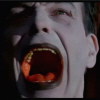

somethingbad wrote:Is the suicide real could almost be a separate thread. I want to say the suicide is not real because that would sit more comfortably with the rest of my current thinking but to me the suicide looks like a real event, springing out of Diane’s deranged daydreams and merging with her hallucinations.
From the thread here:
http://mulholland-drive.net/forum/viewt ... ?f=2&t=199
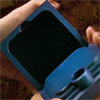
This puzzle has been looked at before, but not for a while, and not by this board. So let’s look at the final scenes and sequence of the film and poke at it and look at the possibilities. Let’s go from the point at which we cut back to Diane on her sofa following the The Bum after the Diane/Joe Winkies scene (edit: or thinking about it, back to the point where we drift from Winkie's round to the back with the Bum playing with the cube), to the final utterance of ‘Silencio’ from the Blue-haired Lady.
I have in the past argued that everything up until the moment that Diane sticks the gun in her mouth and pulls the trigger is the world through her eyes. A hugely distressed young lady suffering hallucinations/visions and being chased to her death bed by terrifying figures of the past.
People have asked the question of how a ‘real’ scene can be immediately followed by such a ‘surreal’ scene with the smoke and merge into Silencio and the girls over LA etc. That’s used as ammunition to say that we must still be in some kind of dream/fantasy being experienced by a third party, or by Diane herself still dreaming.
My suggestion for the scenes immediately following the suicide is that they exist in a different place to the rest of the film. That’s not to say that it’s some kind of paranormal/supernatural explanation. More that to say Lynch has been playing with the language of film so spectacularly in the previous 2hrs20mins that some of the normal rules do not apply here. If you’ve noticed the way that similar ideas and concepts have been surfacing and then submerging in the film, it’s almost like a piece of music with certain movements coming and going and repeating and spinning round.
So on the music idea, I think that the final sequence can be considered a coda of sorts. I particularly like these definition that I found of a coda, and the way that it fits with MD and that sequence:
a concluding musical section that is formally distinct from the main structure
a concluding section or part, esp. one of a conventional form and serving as a summation of preceding themes, motifs, etc., as in a work of literature or drama.
Now, that’s quite an abstract explaining away of those scenes.
Another argument might be that the sequence is part of a dream, and those close-ups of Diane’s eye flickering shut as she sits on the couch is a clue that she’s drifting off again into dreamland on the couch.
Alternatives?